Windmills of the Mind:
Jung, Freud &
Don Quixote
REGISTRATION CLOSING August 14th!!!
Spain, The La Mancha Region: Madrid, Almagro, Toledo
October 22-28, 2026
25 Continuing Education Credits
A Psychoanalytic Immersion in the Landscape of Don Quixote
REGISTRATION CLOSING SOON!!!
Windmills of the Mind is more than a seminar. It is a physical, intellectual, and imaginative immersion into the terrain of the human psyche. To bring this magnificent story to life, we take you into its otherworldly landscape in the heart of Spain.
By following the literal and symbolic path of Don Quixote, the Knight of the Sorrowful Countenance, we explore the fragile boundary between vision and delusion, the struggle for individuation, and the profound psychological insights that would later emerge in the work of Sigmund Freud and C.G. Jung. While our journey is deeply rooted in Jungian thought, we must also acknowledge the "Cervantean" foundations of psychoanalysis itself.
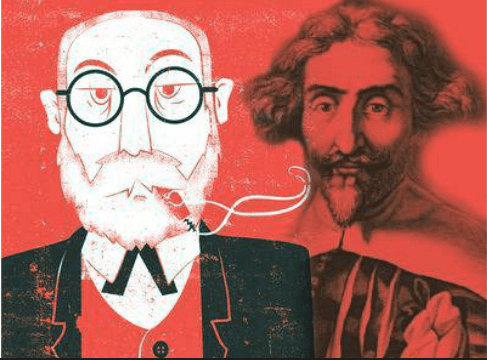
It is a little-known but vital historical fact that, long before psychoanalysis had a name, Cervantes was mapping the inner world. Sigmund Freud was passionately devoted to Cervantes from a young age. As a teenager, he taught himself Spanish for the sole purpose of reading Don Quixote in its original language. He even carried out a private correspondence with his close friend Eduard Silberstein, in which the two addressed each other as Berganza and Cipión, the philosophical dogs from Cervantes’ The Dialogue of the Dogs.
For Freud, Cervantes was not merely a novelist, but a precursor to the exploration of the mind. In Don Quixote’s grand delusions and Sancho Panza’s grounded pragmatism, Freud perceived the dynamic tension between psychic forces that would later become central to psychoanalytic thought.
Throughout the journey, we examine how Cervantes’ narrative dialogues, and his compassionate portrayal of madness, anticipated the “talking cure” and helped shape Freud’s earliest theories of psychoanalysis including the dialogue between analyst and analysand.
Given its length and complexity, Don Quixote can feel, quite literally, like an impossible dream to read in its entirety. For our special Autumn 2026 offering, we distill the novel to its psychological essence, allowing us to observe what Jung called the process of Individuation. Through selected episodes, guided discussion, and embodied exploration, we trace the unfolding journey of becoming, through the very terrain that shaped Cervantes’ imagination.
While generally regarded as one of the greatest, if not the greatest, modern European novels (and perhaps the first), some scholars and critics with great conviction define it as a parody of chivalry. Together, we will explore and decide for ourselves whether longstanding social values of idealism, honor, and loyalty have had their time, or are perhaps in need of revitalization. How crazy is Don Quixote? Are we a bit envious of the purpose and meaning he embodies?
Through visits to sites intimately associated with Don Quixote’s quest, and through multiple modes of expressive and reflective practice, we explore the intertwined journeys of:
Alonso Quijano, the man who becomes Don Quixote
Sancho Panza, his faithful companion and grounding mirror
As we trace their paths, you are invited to attend to your own dreams, daydreams, and inner narratives, beginning the work Jung described as discovering one’s Personal Myth. This inquiry, being personal, psychological, and deeply human, becomes one of the central tasks of our time together.
With Mind Body Passport, your travels become a powerful platform for personal growth and self-discovery. Our carefully curated itinerary combines immersive experiences with thought-provoking seminars supporting learning and exploration!
“I suspected that myth had a meaning which I was sure to miss if I lived outside it in the haze of my own speculations. I was driven to ask myself in all seriousness: ‘What is the myth you are living?’ I found no answer… and had to admit that I was not living with a myth, or even in a myth, but rather in an uncertain cloud of theoretical possibilities which I was beginning to regard with increasing distrust. I did not know that I was living a myth, and even if I had known it, I would not have known what sort of myth was ordering my life without my knowledge. So, in the most natural way, I took it upon myself to get to know ‘my’ myth, and I regarded this as the task of tasks.”
– C.G. Jung, Collected Works V”

Keynote Event: The Freud-Cervantes Evening
We are profoundly honored to announce a private evening in Madrid with Professor Francisco López-Muñoz of the University of Camilo José Cela. As one of the world's leading scholars on the intersection of medicine and literature, and co-author of the pivotal paper Cervantes Read by Freud: A Perspective, Professor López-Muñoz will lead an exclusive lecture and discussion.
This session explores the fascinating historical reality that Sigmund Freud taught himself Spanish specifically to read Don Quixote in its original tongue. We will examine how this 17th-century masterpiece served as a "proto-psychoanalytic" text, influencing Freud's earliest conceptualizations of the human ego, delusion, and the power of the narrative.

Who is this for?
- World and life learners
- Those interested in literature and Cervantes
- If you enjoy exploring old and new, finding relevance in the classical for the modern
- Those interested in Jungian and depth psychology
Psychotherapists & Analysts: Deepen your understanding of Jungian individuation and Freud’s literary influences while earning 25 CE credits.
Scholars & Educators: Explore the intersection of Spanish Golden Age literature and modern depth psychology.
Artists & Creative Souls: Engage in expressive arts and social dreaming to unlock personal creative blocks.
Cultural Travelers: Those who seek a "slow travel" experience that prioritizes intellectual depth, local connection, and psychological insight.
No prior knowledge or experience required to attend!

What will you gain?
- Analyze the Individuation Process: Identify the stages of Jungian individuation as illustrated through the character arcs of Don Quixote and Sancho Panza.
Examine Psychoanalytic Origins: Discuss the historical influence of Cervantes on Sigmund Freud’s early development and the mapping of the psyche.
Apply Terra-psychology Concepts: Evaluate how the physical landscape and "spirit of place" in La Mancha inform the psychological interiority of the traveler.
Utilize Social Dreaming: Discuss and apply the concepts of Social Dreaming and how to utilize The Social Dreaming Matrix in psycho-therapeutic settings.
Integrate Personal Myth: Formulate a framework for identifying the "myth one is living" through the synthesis of literature and clinical observation.

What’s Included?
- All seminars
- 4-star, accommodations in Madrid, Almagro & Toledo
- All breakfasts, 2 lunches , and 2 group dinners
- All excursions with private guides and entrance fees
(see itinerary below)
Itinerary Highlights
Our immersive 7-day journey through La Mancha weaves together literature, depth psychology, history, and sensory experience. Each element is carefully curated to bring the inner and outer landscapes of Don Quixote vividly to life.
Madrid & Alcalá de Henares, The Birthplace of Cervantes
In Alcalá de Henares, the historic “City of Knowledge,” we explore Cervantes through the lens of Freud’s early Spanish studies. We visit the house where Miguel de Cervantes was born, walk Spain’s longest arcaded street, and trace the foundations of Europe’s first planned university city of the modern age.
The Saffron Fields of Consuegra
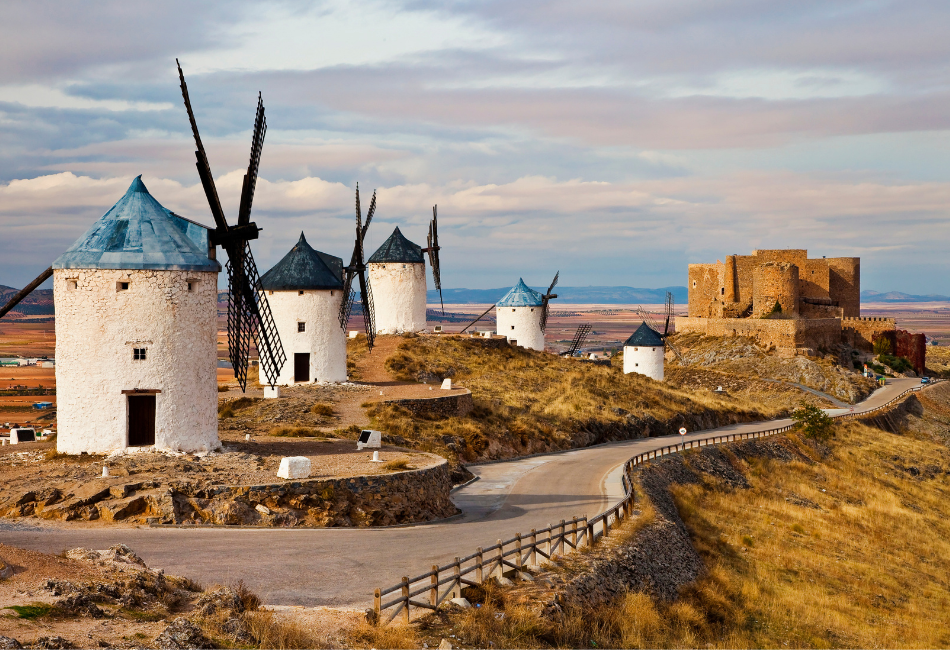
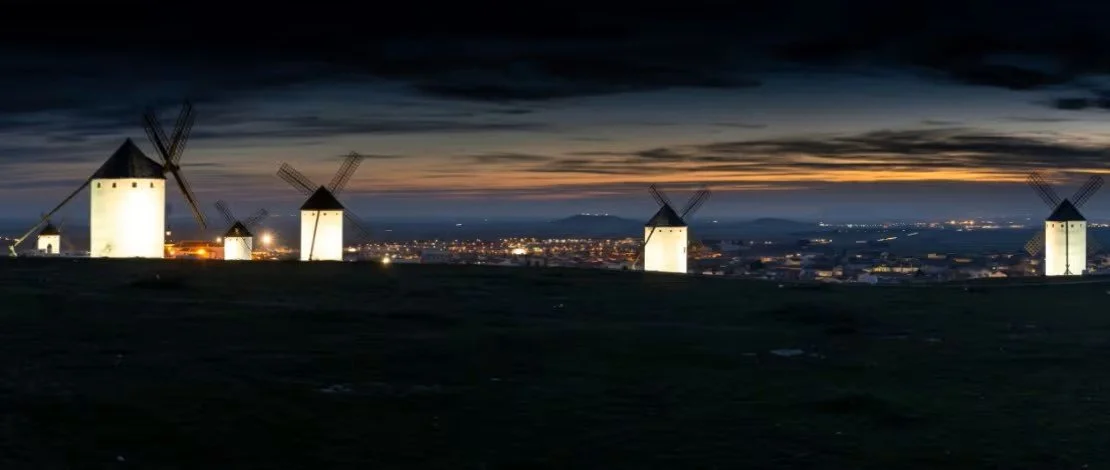
Arriving during the rare October bloom of Crocus sativus, we witness the harvest of the world’s most precious spice. Sixteenth-century windmills rise dramatically above the plains, brought to life during the annual Saffron Rose Festival with traditional music, dance, and wheat-grinding rituals.
Golden Age Theater in Almagro
A private performance at the Corral de Comedias, the only 17th-century courtyard theater in the world that has preserved its original structure and remains in active use, a living encounter with Spain’s Golden Age.
Ancestral Oenology & Manchego Gastronomy
In El Toboso, we visit an artisan wine producer using methods unchanged since Cervantes’ time, followed by a rustic Spanish barbecue at a private farmhouse hosted by a local Manchego cheesemaking family.
Social Dreaming & Daily Seminars
Each morning begins with a Social Dreaming matrix, where participants share and weave together nocturnal images, myths, and associations, allowing collective meaning to emerge from the unconscious, shaped by the landscapes of La Mancha.
Toledo, The City of Three Cultures
Our journey concludes in the former Imperial city of Toledo, a UNESCO World Heritage Site. We wander medieval streets to explore a 10th-century mosque, two ancient synagogues, and a Gothic cathedral, coexisting within meters of one another.
A Grand Farewell
A final dinner in a magnificent 500-year-old palace steps from Toledo Cathedral, featuring a menu by a renowned chef specializing in the refined evolution of Manchego cuisine.
The Freud–Cervantes Keynote Evening
A private evening in Madrid with Professor Francisco López-Muñoz, one of the world’s leading scholars on the intersection of medicine and literature and co-author of Cervantes Read by Freud: A Perspective. This exclusive lecture explores how Don Quixote functioned as a proto-psychoanalytic text, shaping Freud’s earliest conceptions of psyche, delusion, and narrative.
Lecturers

Dr. Leslee Brown, PhD
Dr. Brown is President and Director of Mind Body Passport Inc. designing and leading international trips for adult professionals, offering continuing education credits worldwide. Dr. Brown's interests are multi-faceted, engaging topics of psychology, culture, art, psychoanalysis and social dreaming. She is passionate about weaving many disciplines and interests together and creating an atmosphere of growth and learning. Travel opens ones mind and creates change bringing new perspectives on living life. She also served as The Director of International Seminars and Gastprofessor at Sigmund Freud University, Vienna. International psychology and developing “psychologists without borders” has become her focus. Dr. Brown has been in private practice for over twenty years, has been a research psychologist for The Neurologic Institute and has served on faculty at UCLA Medical School teaching psychology and rapport building techniques to medical students. Dr. Brown was also assistant professor at The Chicago School and Director of Centers for International Studies. Leslee lives and works part time in in Los Angeles, part time in Paris, and the rest of the time is traveling the world.

Margot Estabrook Stienstra, M.I.M., Lic. Phil.
Margot Estabrook Stienstra, M.I.M., Lic. Phil. Is a Jungian psychotherapist trained and practicing in Zürich, Switzerland. She alternates spending time in her homeland of the U.S., nourished by the land, light and sea.
Margot is a Training Analyst (TA) 2023; (w/ Supervision Training via ISAPURICH, 2024–25)
Diploma in Analytical Psychology, 2014
Costs
Boarding’s open! Save $200 pay in full $6465 (regular $6665)
Payment Plan: 3 monthly payments of $2288
A single room supplement is an additional cost please e mail us at Info@mindbodypassport.com.
If there are no double-shared rooms available, you will need to incur the single room supplement.
Need a custom payment plan? Email us at info@mindbodypassport.com
Want to earn $100 – or more? Refer a friend or colleague who signs up, and we’ll send you $100 for each referral.
Want your trip for free? Gather six people who sign up for the same course, and we’ll give you yours for FREE!
Questions? Contact Dr. Leslee Brown at info@mindbodypassport.com for a free one-on-one consultation.
Mind Body Passport is approved by the California Psychological Association to provide continuing professional education for psychologists. Mind Body Passport maintains responsibility for this program and its content.
Mind Body Passport Inc. is also recognized as a CAMFT-approved Continuing Education Provider. Certificate awarded upon successful completion.
CE credits are calculated based on actual lecture/seminar time. Outside activities, tours, and cultural programs are not included.
Health & Safety
Returning to travel in 2022 is our greatest passion and desire. The safety and well-being of Mind Body Passport Inc. participants (as well as our team, suppliers, and others) is of paramount importance to us.
For admission to our courses, Mind Body Passport Inc. requires all participants be fully vaccinated with CDC-approved vaccines.
Refunds
Travel medical insurance is mandatory. We recommend insurance that includes Covid-related delays and changes. Your insurance must cover personal injury, medical treatment, repatriation, and evacuation expenses. We also recommend that the insurance cover personal property and trip cancellation. Trip cancellation insurance may be the only means of receiving reimbursement for flights and other non-refundable expenses in the event the Trip is cancelled, postponed, interrupted, rescheduled, for any reason, by you or us. Please note that most companies offering travel insurance require the policy to be purchased within 14 days after the initial trip deposit or payment in order to cover pre-existing conditions or to provide for “cancel for any reason” coverage.
Once fees are paid, absent Mind Body Passport’s approval in its sole discretion, no refunds will be issued. MBP reserves the right to cancel any trip or any portion thereof for any reason it deems appropriate including but not limited to, low enrollment numbers, political instability and/or health concerns.